
GLP-1 is everywhere right now. It's in headlines, in doctor's office conversations, in group chats. But the idea behind it — supporting the body's natural systems for blood sugar balance and metabolic health — is far from new.
Long before "GLP-1" became a household term, traditional medicine systems across the world were already working with plant-based ingredients to support digestion, balanced blood sugar, and overall metabolic wellness. Herbalists in different corners of the globe, often without any contact with one another, kept arriving at similar plants for similar reasons. That's usually a sign something real is going on.
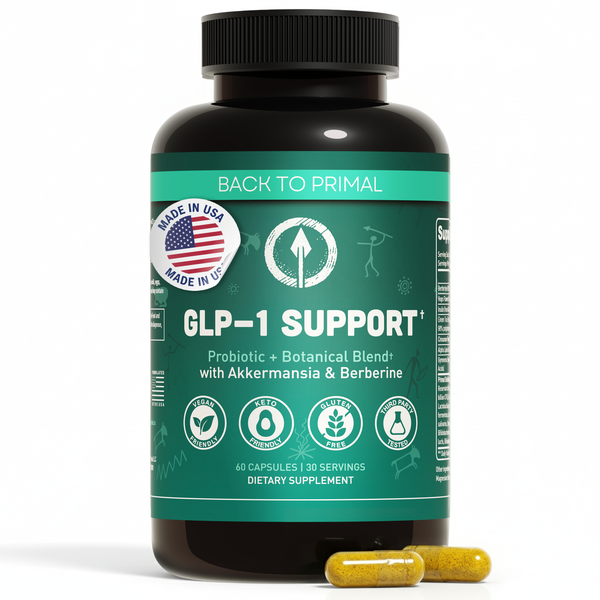
We built GLP-1 Support around three of those ingredients: berberine, Gymnema Sylvestre, and a targeted probiotic blend. Here's a closer look at each one, the history behind it, and why it earned a place in our formula.
Berberine: A Compound With a Long History
Berberine is a natural compound found in several plants, including barberry, goldenseal, and Oregon grape root. It's a bright yellow alkaloid, which is partly why these plants have been used in traditional Chinese and Ayurvedic medicine for generations — easy to identify, easy to extract, and consistently turned to for digestive and metabolic support.
What's interesting is how much modern research has converged on the same conclusions traditional practitioners reached centuries ago. Berberine has become one of the more studied plant compounds in the metabolic health space, particularly around its role in supporting healthy blood sugar levels already within a normal range, and supporting healthy cholesterol levels already within a normal range. Some researchers have even nicknamed it "nature's metformin" because of how its mechanisms appear to overlap with more conventional approaches — though it's important to note that's a comparison of mechanism, not a claim of equivalent effect.
That combination of deep traditional use and modern research interest is exactly the kind of ingredient we look for. Not a trend. A pattern that's held up over time.
Gymnema Sylvestre: The "Sugar Destroyer"
Gymnema Sylvestre carries a nickname that does a lot of explaining on its own. In Hindi, it's sometimes called "gurmar," which translates roughly to "sugar destroyer." That name comes from a genuinely unusual property: chewing the leaf temporarily reduces the perception of sweetness on the tongue. It's one of the few plants in the world known to do this, and Ayurvedic practitioners noticed it thousands of years ago, long before anyone understood why.
Beyond that curiosity, Gymnema has a long history of traditional use for supporting healthy blood sugar levels and balanced metabolic function as part of an overall healthy lifestyle. Modern interest in the plant has grown alongside interest in metabolic health more broadly, with researchers examining how its compounds may interact with sugar absorption and insulin response.
We included it not for the novelty of the sweetness effect, but for the same reason traditional medicine reached for it in the first place: consistent support for metabolic balance.
Probiotics: The Gut-Metabolism Connection
Metabolic health doesn't start and end with blood sugar. The gut plays a far bigger role in metabolic function than most people realize, and that connection has become one of the more active areas of nutrition research over the past decade.
Our formula includes a probiotic blend to support healthy digestion and gut flora balance. A balanced gut microbiome has been linked in ongoing research to better nutrient absorption, more stable energy levels, and broader metabolic and digestive wellness. We see this as the foundation the other two ingredients build on — not an afterthought.
How These Work Together
No single ingredient does the whole job, and we'd be skeptical of any formula that claimed otherwise. Berberine and Gymnema Sylvestre approach metabolic support from different angles — one rooted in research on blood sugar and lipid balance, the other in traditional use for sugar response and metabolic regulation. The probiotic blend supports the digestive environment both of those ingredients depend on.
That's the thinking behind every Back to Primal formula: build around how the body actually works, not around a single trending compound.
A Few Common Questions
Is this the same as a GLP-1 medication?
No. GLP-1 Support is a dietary supplement built around traditional herbal ingredients and a probiotic blend. It's not a drug, doesn't work through the same mechanism as prescription GLP-1 medications, and isn't intended to replace medical treatment of any kind.
How long before I notice anything?
This varies person to person, and we'd rather be straightforward than promise a timeline. Many people pair a formula like this with consistent habits — diet, movement, sleep — rather than expecting it to work in isolation.
Should I talk to my doctor first?
Yes, especially if you're pregnant, nursing, taking medication, or managing an existing health condition. We'd always rather you ask first than wonder later.
Why We Build This Way
We believe in formulas built around ingredients with a real history of traditional use, supported by ongoing research — not whatever ingredient happens to be trending this year. GLP-1 Support reflects that philosophy: ancestral ingredients, brought into a modern formula, with full transparency on what's actually inside and why it's there.
These statements have not been evaluated by the Food and Drug Administration. This product is not intended to diagnose, treat, cure, or prevent any disease. Always consult your healthcare provider before starting any new supplement, especially if you are pregnant, nursing, or taking medication.
0 comments